
Transaction Coordinators Should Stop Coordinating
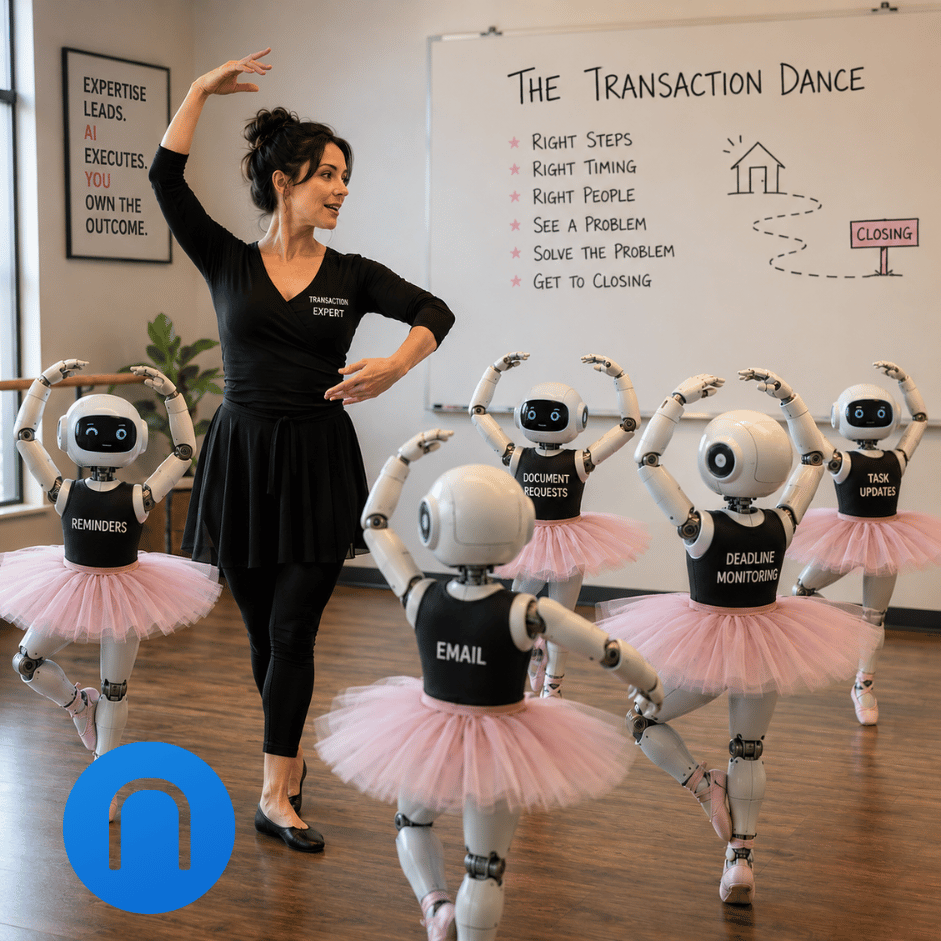
The biggest competitor to a Transaction Coordinator isn't another TC anymore. It's an AI Agent, and that changes everything about what the role should become.
For years, the biggest competition for a Transaction Coordinator was another Transaction Coordinator. I don't think that's true anymore. The biggest competitor to a TC isn't another person doing the same job. It's an AI Agent.
An AI Agent is different from the AI tools we've been using for the last few years. Instead of simply answering a question, writing an email or helping you complete a task, an AI Agent can take an objective and execute the steps needed to accomplish it.
Give an AI Agent access to your email, phone system, real estate transaction management software, CRM, document platforms and other websites you use throughout a transaction, and it could eventually have most of the tools it needs to manage the process.
It could read the contract, identify deadlines, create tasks, send emails and texts, make phone calls, request documents, follow up with agents and lenders, update the transaction, search for missing information and monitor what still needs to happen.
Instead of telling the AI what to do at every step, you could give it an objective: "Get this transaction from contract to closing."
The biggest competitor to a TC isn't another person doing the same job. It's an AI Agent.
That's a very different kind of automation, and it's going to change Transaction Management. But I don't think it means Transaction Coordinators are going away. I think it means the role is going to be elevated.
The future of the TC isn't about competing with AI to see who can send the most reminders, update the most tasks or enter the most data. It's about becoming exceptionally good at the parts of the transaction that require judgment, expertise, problem solving and ownership.
AI Agents Will Actually Do the Work
Before we talk about what AI Agents won't be able to do, we need to acknowledge what they probably will.
An AI Agent won't just help a Transaction Coordinator manage a transaction. It could eventually manage much of the transaction itself. With access to the right systems and permissions, an agent could monitor deadlines, communicate with the people involved, update records, request documents and take action when something needs to happen.
It could move between your transaction management system, email, phone system, CRM, document platforms and third party websites without waiting for someone to tell it which system to open next.
And that's the important distinction. We're moving beyond automating individual tasks and toward AI Agents that can be given an objective, make decisions about the next step and execute the work across multiple systems.
That future is coming, and Transaction Coordinators should pay attention to it. Not because they need to figure out how to compete with AI, but because they need to figure out what their role becomes when AI can handle much of the coordination.
Where AI Agents Will Screw Things Up
As impressive as AI Agents will become, real estate transactions are full of situations that don't fit neatly into a workflow. An agent may be able to recognize that an HOA document is missing, but what happens when the association's website doesn't work, the phone number listed online is disconnected and the only person who can help is three departments deep in a phone system?
Or consider a missing addendum. The AI searches the transaction management system and doesn't find it, then checks the CRM and the connected document storage. It still can't find the document. Does it know that the agent may have uploaded it to a completely different system, attached it to an email six weeks ago or saved it under a name that has nothing to do with the actual document?
These aren't necessarily problems that AI will never be able to solve. Eventually, an AI Agent may be able to handle many of them. The problem is that when an AI gets something wrong in a transaction, it can be difficult to know whether it made a reasonable decision based on bad information or simply made the wrong decision.
And then there are the situations that require judgment. Should the TC spend $175 to order documents from a third party website when nobody has authorized the expense? Should they call the lender's office for the fourth time, or try to find someone else who can get the answer? Should they keep sending emails and texts when a client is clearly frustrated, or pick up the phone and have an actual conversation?
A great Transaction Coordinator doesn't just follow the process when something goes wrong. They take ownership of getting it resolved.
Answering those questions well is where the role starts to become less about coordination and more about expertise. It takes someone who can figure out what happened, decide what matters and determine who needs to be involved, and then own the outcome from there.
The Expertise Is Moving to the TC
There is another reason Transaction Coordinators are becoming more important, and it has nothing to do with AI. Real estate teams have become increasingly specialized, with buyer agents focused on finding buyers, showing homes and writing offers while other people handle the transaction once the contract is signed.
That specialization creates tremendous efficiency, but it also creates a tradeoff. An agent who hands off every transaction after the contract is accepted may close a lot of deals without ever developing deep expertise in the problems that happen between contract and closing.
The Transaction Coordinator, on the other hand, is seeing those problems over and over again. They are the ones figuring out why a document is missing, chasing down a lender, dealing with an unusual inspection issue, navigating an association requirement or figuring out what needs to happen when the transaction doesn't follow the normal path.
Over time, that creates something incredibly valuable: transaction expertise. The routine work still matters, and good transaction coordinator software should carry as much of it as possible, but the expertise is what makes a TC hard to replace.
And I don't think that expertise is moving to the TC because agents don't want it. It's happening out of necessity. As teams become more specialized, someone still needs to understand the entire transaction and know what to do when things get complicated. Increasingly, that person is the TC.
Stop thinking of yourself as the person who coordinates the transaction. Start thinking of yourself as the person who understands it.
That shift in how you see your own role is the opportunity. Once you own the understanding of the whole transaction, the coordination becomes just one part of a much more valuable job.
Become the Person Who Solves the Problem
The best Transaction Coordinators aren't necessarily the ones who can follow a process the fastest. They're the ones who know what to do when the process stops working.
That means learning how to troubleshoot a transaction instead of simply monitoring it. If a document is missing, don't just mark the task incomplete. Figure out where it could be, who might have it and how to get it. If a lender isn't responding, don't just send another reminder. Find another way to get the answer.
This kind of expertise comes from seeing a lot of transactions and paying attention to the problems that happen along the way. Learn the systems your agents, lenders, title companies and associations use. Understand where information typically gets lost and who actually has the authority to solve different problems.
Over time, you become the person people call when something doesn't make sense. That's a very different role from coordinating tasks, and it's one that's much harder to replace with an AI Agent.
Build Your Network, Not Just Your Workflow
One of the most valuable things a Transaction Coordinator can develop is a network of people they know and trust. Build relationships with lenders, title companies, attorneys, association staff and the agents you work with regularly. Learn who is good at what, who responds quickly and who you need to call when a normal channel isn't getting you anywhere.
That relationship can make a huge difference when something goes wrong. When you can call a lender and say, "Hey, I need your help with this," and they recognize your number and answer the phone, you've created something that isn't sitting inside your transaction management software.
The same goes for knowing the right person to call. Maybe the general title company number isn't going to solve the problem, but you know the closer who can. Maybe the association's website says one thing, but you know the person in their office who actually handles these requests. Maybe an agent you've worked with before knows exactly who to contact.
That's expertise too. It's knowing the people who can get things done. And the more transactions you manage, the more valuable that network becomes.
An AI Agent can find the right phone number. It won't have the relationship with the person who answers.
Know When to Stop Automating
A good Transaction Coordinator knows that more communication isn't always better communication. Sometimes the third email, second text and automated reminder aren't going to move anything forward. The situation needs a phone call, and sometimes it needs a conversation with a person who understands what's really going on.
That judgment becomes especially important when emotions enter the transaction. A frustrated buyer, an angry seller or an agent who feels like someone dropped the ball may not need another perfectly worded message. They need someone to listen, understand the problem and figure out what will actually make it better.
This is where knowing your relationships matters. You need to recognize when to call the lender you trust, when to call the title closer directly, when to involve the agent and when a problem needs to be escalated to the broker or another professional.
AI Agents will become very good at communicating. The opportunity for the TC is to become very good at knowing when communication isn't the answer.
Take Ownership of the Outcome
There is a big difference between coordinating a transaction and owning the outcome of a transaction. A coordinator can make sure the right task is assigned, the right reminder is sent and the right person is notified. An expert looks at the situation and asks, "What needs to happen to get this closed?"
Sometimes that means making a judgment call. Maybe the association documents cost $175 and nobody has specifically authorized the expense, but waiting three days for approval could put the transaction at risk. Maybe you need to spend an hour tracking down a document that technically isn't your responsibility. Maybe you need to make five phone calls because the first four didn't get you anywhere.
That's ownership. You're not just making sure the process is being followed. You're taking responsibility for getting the transaction across the finish line.
The more a TC becomes that person, the less they look like a coordinator and the more they look like the transaction expert every successful team needs.
Stop Coordinating. Start Becoming the Expert.
The title of this article isn't meant to suggest that Transaction Coordinators should stop managing transactions. It's the opposite. The best TCs will become more important to the transaction, not less.
AI Agents will take over more of the repetitive work that has traditionally filled a TC's day. They will send the reminders, update the systems, monitor deadlines and handle much of the routine communication. That should free TCs to spend more time doing the work that actually requires experience and judgment.
The opportunity is to become the person who knows what should happen, recognizes when something isn't right and knows how to fix it. Build the relationships that get your calls answered. Learn the systems well enough to find what others can't. Understand the transaction well enough to know when a problem matters and when it doesn't. Most importantly, become the person who takes ownership when something goes wrong.
The Transaction Coordinator of the future won't compete with AI by trying to coordinate faster. They'll use AI to eliminate coordination and become the transaction expert their team can't operate without.
This isn't the end of the Transaction Coordinator. It's the beginning of the Transaction Expert.