
The Transaction Coordinator's New Job Description
The transaction coordinator role is growing up. Here's what that means for how you spend your week.
Ask any transaction coordinator what their week looks like and you'll hear a familiar list. Chase a signature. Send the same inspection reminder you have sent a thousand times. Update a date. Rewrite an email that was already fine. Send it. Do it again for the next file.
It feels like work. It fills the day. But somewhere in there is a question worth asking: is all of that actually the job, or is it just standing in front of the job?
Because the real work, the part that clients remember, is rarely the busy work. It's the phone call that calmed someone down. The follow-up that caught a problem early. The email that was clear enough to actually get read and acted on.
That is the part worth protecting. And it is exactly the part that gets squeezed out when your hours disappear into manual tasks. This is where AI for real estate emails changes the math.
The role is growing up
For a long time, transaction coordination was treated as back-office work. Necessary, but invisible. It was plagued by two things: a lack of transparency and a mountain of busy work.
That is changing fast.
The TC market is growing, and the expectations around it are growing even faster. Everyone in the deal expects instant answers now. Buyers and sellers want to know what is happening with the biggest purchase of their life, right now. And your agents are clients too. They need the same information, just as fast, so they can keep their own clients calm and confident.
Nobody wants to wait until Monday. Nobody wants to feel like they are being managed.
You cannot deliver that experience if you're too focused on copying email templates and checking boxes all day. The work that helps you stand out and build trust is getting crowded out by the work that is focused on an empty inbox.
Motion is not the same as progress
Here is the trap. The remedial work does move the transaction forward. Sending the reminder, updating the date, checking the box. It all needs to happen, and it does keep the file moving.
But there is a cost hiding in it.
When you are rushing through templates to stay on top of everything, the communication gets impersonal. It comes out too formal. Too scripted. And the client feels it. Instead of another caring human working with them toward the outcome they want, you start to read like a robot.
That is the part that does not show up on a checklist. The deal advances, but the relationship does not. And in a business built on trust and referrals, the relationship is the whole point.
Instead of spending all your minutes keeping the machine running, consider how you can refocus those minutes into better communication, faster follow-up, and catching the small problems before they turn into big ones.
Where AI actually earns its place
The point of AI in Nekst is not to replace the coordinator. It is to remove the redundant part of the job so the person can do the human part.
Two new things do exactly that.
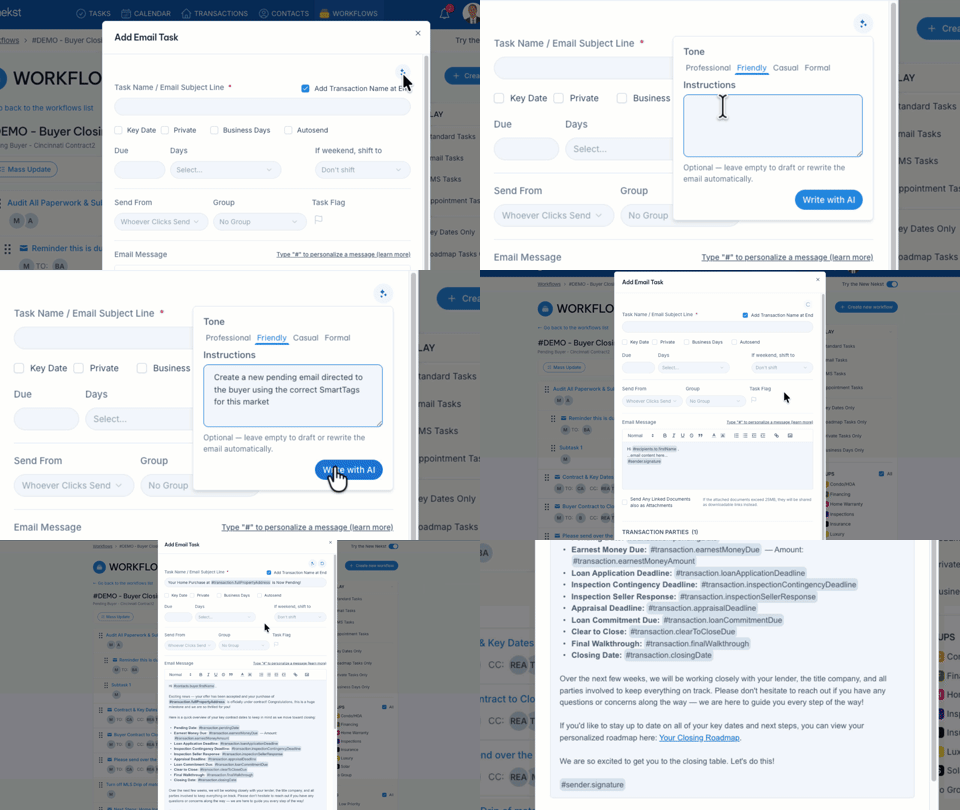
Write with AI. Open any email task, click the Sparkle icon, pick a tone, and let Nekst draft the message. Start from a blank message or rewrite a template you already have. Your SmartTags stay intact, so the data still pulls from the right place, and any field with no value is left out automatically. No more "N/A" in a client's inbox. Set your tone and your rules once in Settings, and every AI email follows them.
The result is an email that still sounds like you, without the copy-paste grind that made it sound like everyone else.
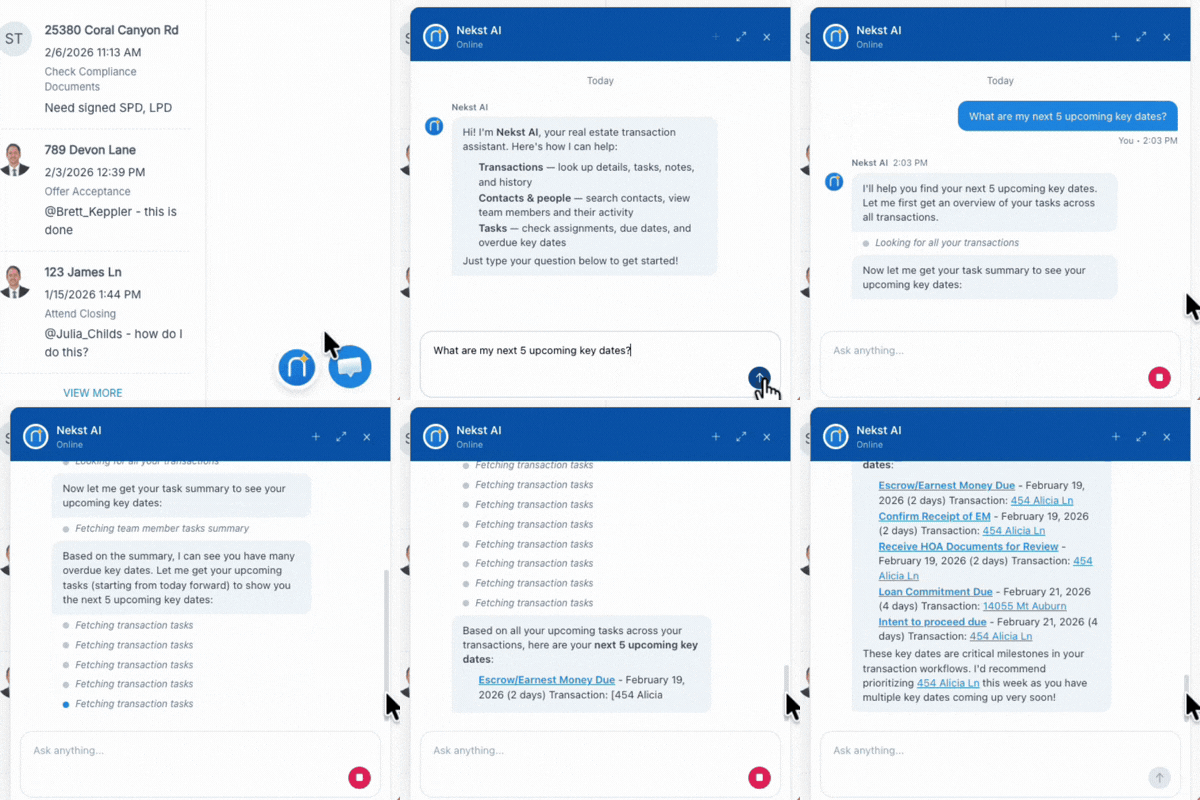
Nekst AI Chat, now in the mobile apps. This one cuts two ways.
With Nekst AI, you can summon any transaction detail, transaction party's info, or contract document on demand. Ask questions across multiple transactions at once, active or closed. The answer is right there, no digging required.
That changes the experience on both ends.
Your clients get instant answers about their transaction, right from their phone. No calling you to ask when closing is. No waiting on a reply. They ask, they get the answer, they feel taken care of.
And you get your focus back. You are no longer the human lookup service. No scrolling through paperwork to find a date. No spending your weekend texting a client the closing date for the third time that week.
Work ON the business, not just IN it
Here is what this really unlocks, whether you are an agent or a transaction coordinator.
There is the work you do inside the business, the transactional work that has to get done on every file. And there is the work you do on the business, the part that actually grows it.
Most people never get to the second one, because the first one eats the whole day.
When AI takes the redundant tasks off your plate, you get that time back. You can put it into better communication. Into follow-up that is early instead of late. Into writing emails that actually get read because you had the bandwidth to make them good. And into the bigger-picture work that grows your business instead of just maintaining it.
The right transaction coordinator software should give you that room, not just another checklist. Same hours. More deals. Better service.
A first step toward elevating the position
This is bigger than two features.
For years, transaction management was the part of real estate nobody wanted to look at. The busy work. The invisible glue. This is a first step toward changing that, toward elevating the coordinator into what the role actually is: the difference between a smooth closing and a stressful one.
Think about the goal that way. The agent gets remembered. The lender gets remembered. The coordinator, the person who actually held the whole thing together, usually does not. That is the part worth changing.
Aim higher than a finished checklist. Aim to be seen as every bit as valuable as the agent and the lender. Aim for your name to be the one that gets dropped in the Zillow review, because the client could feel that someone was on top of every detail and genuinely cared how it turned out.
You do not get there by sending more templated emails. You get there with the time and attention that busy work steals from you.
The role is growing. The expectations are rising. The tools are finally catching up.
Let the software handle the redundant work. That is what it is for. It frees you to handle the part only a person can: the communication, the judgment, and the service that clients remember long after the keys change hands.